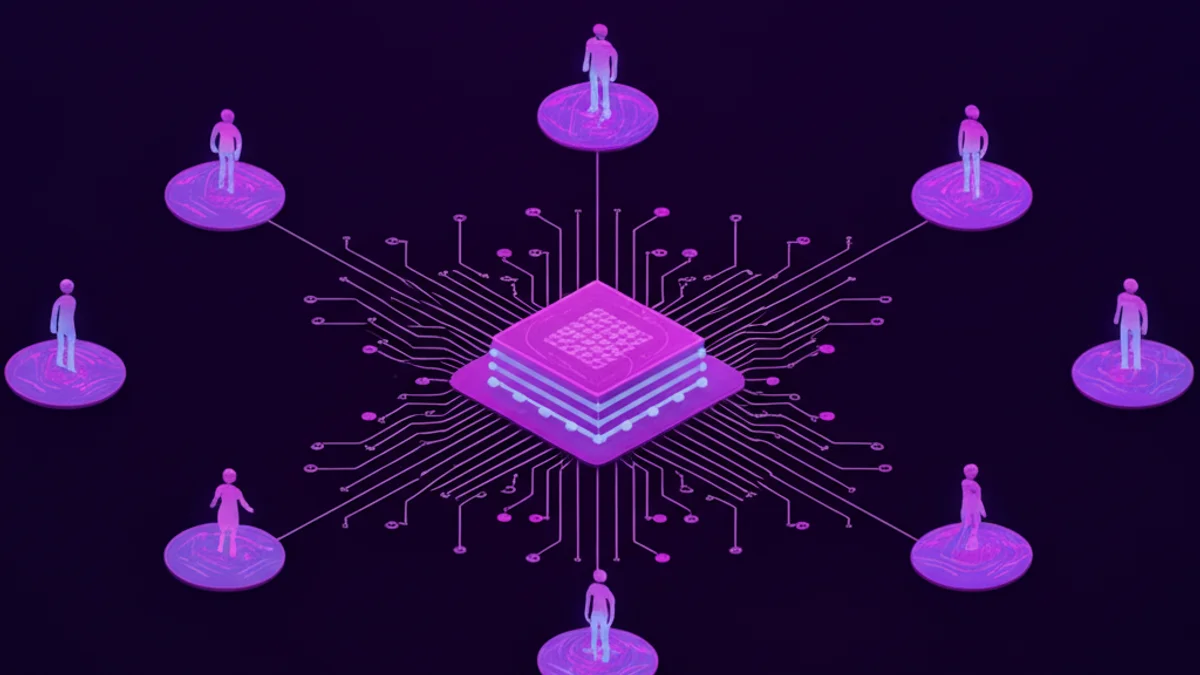
TL;DR — Individual AI agents are solved. Making them work together is not. Multi-agent coordination fails predictably (communication overhead, inconsistent state, cascading failures), but teams that invest in clear roles, structured communication, and centralized orchestration now will automate workflows others simply cannot.
Where We Are Today
Something remarkable has happened in the AI industry over the past few years. We’ve essentially solved the problem of making individual AI agents intelligent. Models like GPT-4 and Claude can now handle remarkably complex tasks on their own—writing code, analyzing documents, answering nuanced questions, and much more. If you give these systems a well-defined task, they’ll usually complete it competently.
But here’s the thing: solving individual intelligence was just the beginning. The real challenge—and the massive opportunity ahead—is figuring out how to make multiple AI agents work together effectively.
Why This Matters for Your Business
Think about how work actually happens in your organization. Almost nothing important gets done by a single person acting alone. A customer service interaction might involve looking up account information, checking company policies, processing an order, and deciding whether to escalate to a manager. A software deployment requires someone to review the code, run tests, check for security vulnerabilities, and set up monitoring. Financial analysis means extracting data from multiple sources, running calculations, validating the results, and creating reports.
No single AI agent, no matter how intelligent, can do all of these things well. The capabilities required are simply too diverse. But a team of specialized agents, each focused on what they do best? That’s a different story entirely. When agents can coordinate effectively, they can tackle complex workflows that would be impossible for any single agent to handle.
The problem is that most attempts at multi-agent coordination fail. And they fail in ways that are surprisingly predictable.
Key Takeaway — Individual agent intelligence is a solved problem. Coordination is not. The gap between single-agent capability and multi-agent reliability is where the real opportunity lies.
Where Multi-Agent Systems Go Wrong
The most common failure is communication overhead. When agents spend more time talking to each other than actually working, you end up with a system that’s slower than just using a single agent. It’s like holding a meeting where everyone talks about the work instead of doing it.
Inconsistent state compounds the problem. Agent A makes a decision based on information from Agent B — but that information is already outdated. The results become unpredictable because the agents are essentially working with different versions of reality.
Accountability gets murky too. When something goes wrong in a multi-agent system, figuring out which agent made the mistake can feel impossible. Without clear ownership, debugging becomes a nightmare.
And all of these issues become catastrophic when failures cascade. One agent fails and takes down the entire system. A well-designed system should degrade gracefully, not collapse entirely when a single component has a problem.
Patterns That Actually Work
After studying many multi-agent systems—both successful and failed—we’ve identified several patterns that consistently lead to better outcomes.
Clear roles are the foundation. Each agent needs a well-defined responsibility with no overlap and no gaps. Think of it like a well-run kitchen: the chef who handles sauces doesn’t interfere with the one preparing proteins. A code review agent should focus solely on code quality, while a separate security agent handles vulnerability scanning. They work in parallel without duplicating effort.
Structured communication keeps those roles clean. When agents communicate through defined formats rather than loose natural language, ambiguity drops dramatically. Instead of one agent telling another to “please check this code,” the system sends a precisely defined request with specific parameters. It feels rigid, but it eliminates entire categories of miscommunication.
A centralized orchestrator ties it together. One coordinator agent manages the overall workflow and maintains shared state. Individual worker agents don’t need to know about each other — they just receive tasks and return results. The orchestrator handles routing, aggregation, and error recovery, simplifying each agent’s job while keeping the overall system manageable.
None of this works without observability. Every action every agent takes should be logged. When you can trace which agent made which decision based on what information, debugging transforms from guesswork into straightforward investigation.
Important — Clear roles, structured communication, centralized orchestration, and full observability. Skip any one of these and multi-agent coordination degrades rapidly.
The Opportunity Ahead
The tooling for multi-agent coordination is still immature. Most teams building these systems are solving the same problems independently: workflow orchestration, state management, observability, testing. The patterns exist, but the infrastructure doesn’t.
This is where the real work happens. Not in making individual agents smarter—that problem is largely solved—but in making them work together reliably. Teams that invest in coordination infrastructure now will be able to tackle workflows that others simply can’t automate.
How We’re Approaching This
At Agents Squads, we’re developing orchestration patterns that actually work in production environments. Our approach starts simple—get two agents working together reliably before adding a third. We make everything observable from day one, because you can’t fix what you can’t see. We test extensively, knowing that edge cases multiply quickly when multiple agents are involved. And we design for graceful failure, ensuring that one agent’s problems don’t bring down the entire system.
Looking Forward
We run our own company on multi-agent systems. Our squads—domain-aligned teams of agents—handle everything from market research to content production to code deployment. We’re learning what works by doing it ourselves, every day.
The most promising patterns we’ve found involve small, focused teams: three to five agents for research workflows, four to six for software deployment, two to four for data analysis. Smaller is usually better. Coordination costs grow faster than capabilities.
Our Data — Optimal team sizes from our production systems: 3-5 agents for research, 4-6 for deployment, 2-4 for data analysis. Coordination costs grow faster than capabilities, so smaller consistently beats larger.
If you’re building multi-agent systems, we’d like to compare notes: contact@agents-squads.com
From Theory to Practice
We’ve built these coordination patterns into production systems:
- Squads Architecture — Our approach to organizing agents into domain-aligned teams
- Memory Systems — How agents maintain consistent state across sessions
- Git Worktrees — Enabling parallel agent execution without conflicts
Get Intelligence Reports
How are enterprises deploying multi-agent systems? Our Intelligence Reports cover real-world implementations, success patterns, and the technology stack decisions that matter.